Market Stall or Neighbourhood Shop: Where to Find a Regional Ingredient
Find a regional ingredient with a market stall or neighbourhood shop by comparing seasonal choice, clear origin information and the questions sellers can answer.
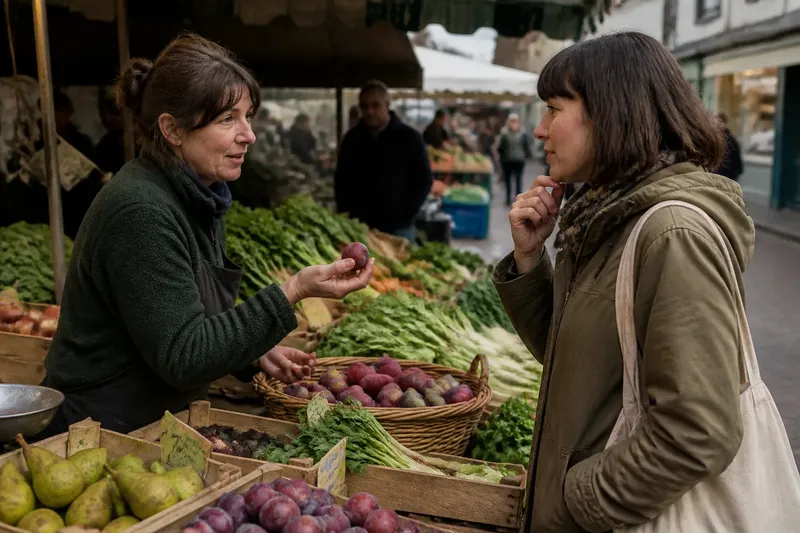
You spot a heap of knobbly green pods beside the usual onions and wonder whether they belong in the stew planned for supper. To find a regional ingredient, start with the question you need answered: a market stall may help you compare what is in season, while a neighbourhood shop may be a convenient place to ask about a named product.
Neither setting is automatically more local, knowledgeable or useful. Begin with the ingredient itself, then choose the place that can best clarify its origin, name or cooking use.
Define the ingredient
Before setting out, describe what you are looking for as precisely as you can. A regional ingredient might be a named variety, a locally made preserve, a particular cut of fish, a wild herb sold by a licensed gatherer, or simply a crop grown nearby. These are different requests, and a stall or shop may be suited to one but not another.
Write down the name if you know it, including any local spelling or alternative name. If you do not, note how you have seen it used: perhaps a tart apple for cooking, a firm bean for a slow braise, or a pungent leaf stirred into a dressing. A photograph can help, but avoid relying on appearance alone when several varieties look alike.
Decide what “regional” means for this search. You might mean grown in the surrounding countryside, made in the town, associated with a local recipe, or sold by someone who knows the producers. Ask about origin rather than assuming that a familiar market setting or hand-lettered sign settles the matter.
Keep the request simple enough to explain in a sentence. “I’m looking for a local cooking apple that keeps its shape” gives a seller more to work with than “I want something traditional”.
Choose your first stop
Choose a market stall when you want to compare what is available at a glance. Several varieties may sit side by side, and the display can show what is in season, what has arrived, and what sellers suggest cooking now. A market can be useful if you are still deciding which ingredient will suit your dish.
Choose a neighbourhood shop when you have a defined request or want a straightforward conversation without walking through a larger spread of stalls. A grocer, fishmonger, baker or specialist food shop may know the names customers use locally, how a product is commonly prepared, or when it is worth asking again. That knowledge varies by shop, so treat it as a possibility rather than a promise.
Practicalities matter too. Consider opening hours, distance, weather, how much time you have, and whether you can carry delicate produce home without damage. If the market is open on a particular day, it may be a natural first stop for a seasonal crop. If you are passing a shop on the way home, a brief visit may be enough to check availability.
Say you want a regional plum for a savoury sauce but do not know its local name. Imagine that your starting point is a planned sauce and uncertainty about which plum will cook down well. First, you visit a market with several fruit stalls and ask which varieties are tart and hold their flavour when cooked; you compare the answers and the fruit on offer. Next, you ask a nearby greengrocer whether a named plum is grown locally and how it behaves in a sauce. If the market clarifies cooking use but not origin, while the shop confirms origin but has no suitable fruit today, you can decide whether to buy a cooking plum now or wait for the locally grown one. The result is a clear trade-off, not a claim that one venue is always superior.
Read the stall or shop
Once you arrive, look before you buy. At a market stall, notice whether varieties are named and whether the seller distinguishes local produce from goods brought in from elsewhere. At a shop, check shelf labels, handwritten notes and the way different origins are identified. A regional name may refer to a recipe or style rather than the place where the ingredient was grown.
Look for practical clues, not theatrical ones. Produce may vary in size or have natural marks; neither detail proves its origin. A neat display does not make food less local, and a rustic-looking crate does not make it more so. Use labels and a direct question to fill the gap between appearance and information.
Ask about the exact item you are considering. “Where was this grown?” is more useful than asking whether the whole stall is local. For a prepared food, ask where it was made and what its regional name means. If the seller does not know, keep looking or choose something else rather than pressing them to guess.
At a shop, packaging may name a producer or origin. At a market, the seller may be able to tell you more directly, or may simply be reselling goods. Either arrangement can be perfectly ordinary. What matters is whether the information is clear enough for the decision you are making.
Ask useful questions
Short, specific questions invite answers you can use. Ask one at a time, and let the seller finish before adding another. If the place is busy, keep the exchange brief and return later if you need a longer explanation.
- Check whether the seller can name where the item was grown or made. If they can, decide whether that origin fits your meaning of regional; if they cannot, ask about a different item or leave origin unconfirmed.
- Check whether the variety is the one commonly used for your intended dish. If it is, consider buying it; if not, ask which alternative is better suited.
- Check what is in season at the moment. If the ingredient is available now and suits your meal, consider it; if not, ask when to return or choose another seasonal option.
- Check how the seller would prepare the ingredient. If the advice fits your cooking plan, use it to decide whether to buy; if the preparation does not suit, ask about another variety.
- Check whether the seller expects the ingredient to come in later. If they can suggest a likely return visit, note it; if they cannot, ask for a local name or suitable alternative.
- Check whether the seller can explain what a regional name refers to. If it identifies a growing place or variety you want, proceed accordingly; if it describes only a style, ask where the product itself comes from.
For unfamiliar produce, ask for one manageable piece of advice: whether to peel it, remove its seeds, or add it early or late in cooking. You are not asking the seller to plan the whole meal. A useful answer should help you decide whether the ingredient fits what you intend to make.
Listen for distinctions as well as recommendations. A seller might explain that one local variety is eaten raw while another is better cooked, or that the name on a sign describes a style rather than a growing place. If the answer is vague, narrow the question: “Do you mean it is grown in this county, or that it is a local variety?”
Compare the options
When both a market and a shop are available, compare them on the question you still need answered. For a changing crop, a market may show the day’s range and reveal which varieties have arrived. For a named ingredient, a shop may have a label or a specialist who can clarify what the name refers to. These are tendencies, not rules: a small shop can have seasonal produce, and a stall can offer a narrow selection.
Price alone does not tell you whether an ingredient is regional. Nor does a seller’s familiarity with a dish necessarily mean the produce came from nearby. Keep origin, season, cooking use and convenience as separate considerations, so one appealing feature does not stand in for the others.
If you are undecided, ask whether a small quantity is available. For an unfamiliar ingredient, a modest purchase can help you learn its taste and texture without committing the rest of your meal to it. If the seller cannot provide a smaller amount, note the name and return when you have a suitable recipe.
There is no need to turn a casual food shop into an inspection. One clear answer about origin and one useful answer about handling may be enough. If either remains uncertain, choose a familiar ingredient today and keep the regional name for another visit.
Which place suits your search?
Is a market better for seasonal ingredients?
A market can make seasonal change easy to see because several sellers may display different varieties at once. Ask what has arrived recently, then check whether the ingredient suits your intended dish.
Are neighbourhood shops more reliable for local produce?
Not necessarily: a shop may stock local goods, imported goods or both. Read the label or ask about the specific item rather than inferring its origin from the type of shop.
What should I ask about unfamiliar produce?
Ask what it is called locally, how people commonly prepare it and whether it is grown nearby. Those answers separate identity, use and origin without requiring a long conversation.
What if neither place has the ingredient?
Ask when it is usually available, or whether the seller knows a local name or alternative. If the timing does not suit your meal, choose a suitable substitute and keep the request for a later visit.
Buy with a clear purpose
Before paying, check that you have understood the name, origin and cooking use well enough for your plan. For fresh produce, choose items that feel and look appropriate for the way you intend to cook them; for packaged food, read the label for ingredients and storage advice. Follow any handling or preparation directions provided with the product.
Carry delicate leaves, berries or soft fruit separately from heavier groceries where practical. If you have bought something unfamiliar, keep the seller’s name for the ingredient with your recipe note. That small detail can make a later search easier, especially when the same food appears under more than one local name.
Afterwards, remember which question each place answered well. A market may have helped you recognise the season; a shop may have clarified the name or preparation. On your next search for a regional ingredient, begin where the remaining uncertainty lies, and let the food’s season and your own meal decide the rest.